
📞 Call (417) 275-0205 — Free Estimate
Basement Waterproofing Signs Springfield MO Homeowners Should Know
Basement waterproofing becomes necessary when moisture is entering or accumulating in a below-grade space at a level that causes damage or risk. In Springfield, MO, that threshold is reached more often than most homeowners expect — Greene County’s clay soils retain moisture for extended periods after rain events, and the James River basin drainage system keeps groundwater levels elevated across wide areas of the city through Missouri’s wet spring months. The challenge is that many of the early signs of a basement waterproofing problem are subtle enough to be dismissed or attributed to other causes. By the time water is visibly pooling on the floor, the problem has usually been developing for months or years. This guide covers the warning signs that indicate basement waterproofing is needed — from the earliest indicators to the most obvious.
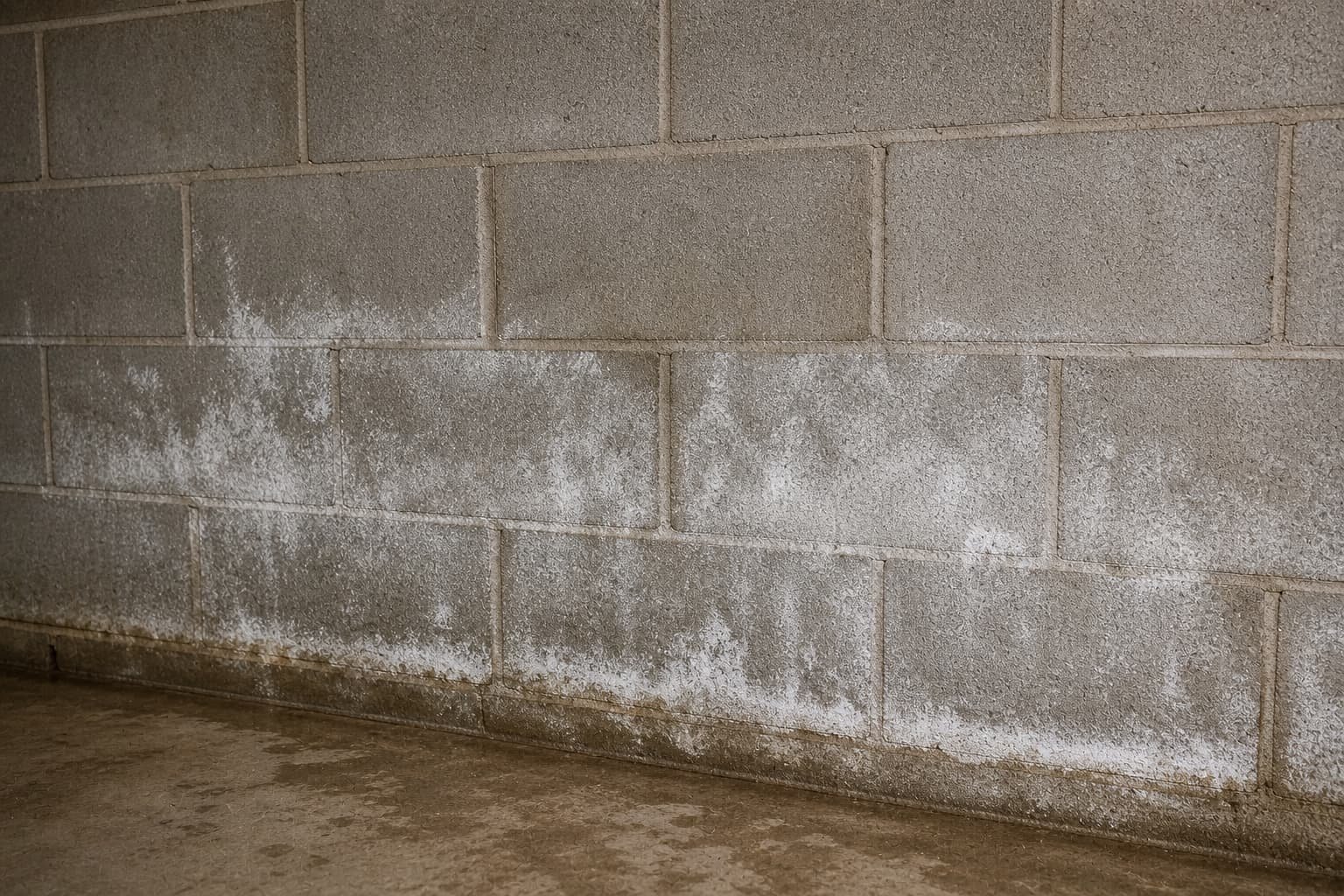
Efflorescence on Basement Walls
Efflorescence is the white or grey powdery mineral deposit that appears on concrete block or poured concrete walls when water moves through the wall and evaporates on the interior surface, leaving dissolved salts behind. It is one of the earliest and most reliable basement waterproofing indicators — it tells you that water is actively migrating through the wall, even if no liquid water is visible on the interior surface. Efflorescence by itself does not cause structural damage, but it confirms that moisture is present in the wall and that the waterproofing barrier on the exterior — if one exists — is no longer functioning. Springfield homes with efflorescence on basement walls should have a waterproofing assessment before the next heavy rain season.
Water Stains and Tide Marks
Horizontal stain lines on basement walls — sometimes called tide marks — indicate that water has reached that level in the past and evaporated, leaving a mineral residue line. Multiple tide marks at different heights indicate that water entry has occurred repeatedly at varying volumes. Stains at the wall-floor joint, where the wall meets the concrete floor, are particularly significant — this joint is the most common water entry point in Springfield basements and the primary target of interior drain tile installation. A basement with tide marks at the wall-floor joint is a strong basement waterproofing candidate regardless of whether water is currently visible.
Musty Odours
A persistent musty smell in a basement or on the ground floor of a home with a crawl space is one of the most commonly dismissed basement waterproofing warning signs. The odour is produced by mold and mildew growing on organic material — wood framing, insulation, cardboard storage boxes — that has been repeatedly dampened by moisture intrusion or condensation. By the time the smell is noticeable upstairs, mold growth in the basement or crawl space is usually well established. Basement waterproofing that controls the moisture source stops the mold growth cycle — but the existing mold requires remediation separately from the waterproofing work.
Peeling Paint and Bubbling Drywall
Basement wall paint that is peeling, bubbling, or flaking off in sheets indicates that moisture is migrating through the wall from outside and pushing the paint off the surface from behind. This is a different failure mode from paint that has simply aged — moisture-driven paint failure typically starts at the base of the wall or around cracks and spreads upward as water entry continues. Drywall that has been installed in a finished basement and is showing bubbling, soft spots, or discolouration at the base is an urgent basement waterproofing situation — drywall that has been repeatedly wetted harbours mold growth behind the surface that is not visible until the board is removed.
Visible Seepage and Standing Water
Active water entry during or after rain events — seeping through wall cracks, bubbling up through floor cracks, or entering at the wall-floor joint — is the most obvious basement waterproofing indicator and the one that most Springfield homeowners act on immediately. By this stage the problem is established and the waterproofing scope is typically larger than it would have been if earlier warning signs had been addressed. A basement that takes in water during a significant rain event but dries out between events can be managed with an interior drain tile system and sump pump — the system captures the water as it enters and routes it out before it can flood the floor.
High Indoor Humidity and Condensation
Basement humidity levels above 60 percent during summer months, condensation on walls and pipes, and window frames that feel damp to the touch are all basement waterproofing indicators in Springfield homes. High basement humidity drives moisture upward through the floor system into the living areas above — contributing to elevated whole-house humidity, musty odours on the ground floor, and in severe cases, moisture damage to hardwood flooring directly above the basement. A dehumidifier manages the symptom but does not address the source — basement waterproofing that controls the entry point is the long-term solution.
When to Call for a Basement Waterproofing Inspection
Basement waterproofing assessment is warranted when any of the above signs are present — efflorescence, tide marks, musty odours, peeling paint, active seepage, or chronic high humidity. Foundation Springfield provides free on-site inspections for Springfield homeowners and the surrounding communities including Nixa, Ozark, Republic, Joplin, and Branson. We assess moisture entry points, check wall condition, evaluate existing drainage, and provide written recommendations before any commitment is required. Call us at (417) 275-0205 to schedule your free inspection.
The U.S. Environmental Protection Agency publishes guidance on indoor moisture management and mold prevention in residential buildings.