
📞 Call (417) 275-0205 — Free Estimate
Crawl Space Repair in Springfield, MO
Crawl space repair at Foundation Springfield addresses the moisture, structural, and air quality problems that develop under homes with vented or unprotected crawl spaces. Homes in Springfield’s older neighbourhoods — particularly the ranch-style builds from the 1950s and 1960s in Midtown, the Rountree area, and along the Glenstone corridor — were built with open crawl spaces that vent to outside air. In Missouri’s humid summers, that design draws warm moist air under the floor where it condenses on joists, insulation, and the underside of subfloor sheathing. Over years, this produces wood rot, mold growth, and sagging floor systems that become noticeable as soft spots or visible bounce underfoot. By the time a homeowner notices the floor moving, the damage has usually been accumulating for years.
Why Springfield Crawl Spaces Fail
Southwest Missouri’s climate is particularly hard on crawl spaces. Summer humidity regularly exceeds 70 percent, and the temperature differential between the warm outside air and the cooler crawl space environment creates near-constant condensation on structural framing from June through September. Greene County’s clay soils retain moisture after rain events and release it slowly as vapour through the crawl space floor — even in dry summers, there is moisture migrating upward from the ground. Homes near Pearson Creek, Wilson’s Creek, and the James River drainage corridors see elevated groundwater that makes the problem worse on low-lying lots. Without a vapour barrier and proper sealing, none of this moisture has anywhere to go except into the wood framing above it.
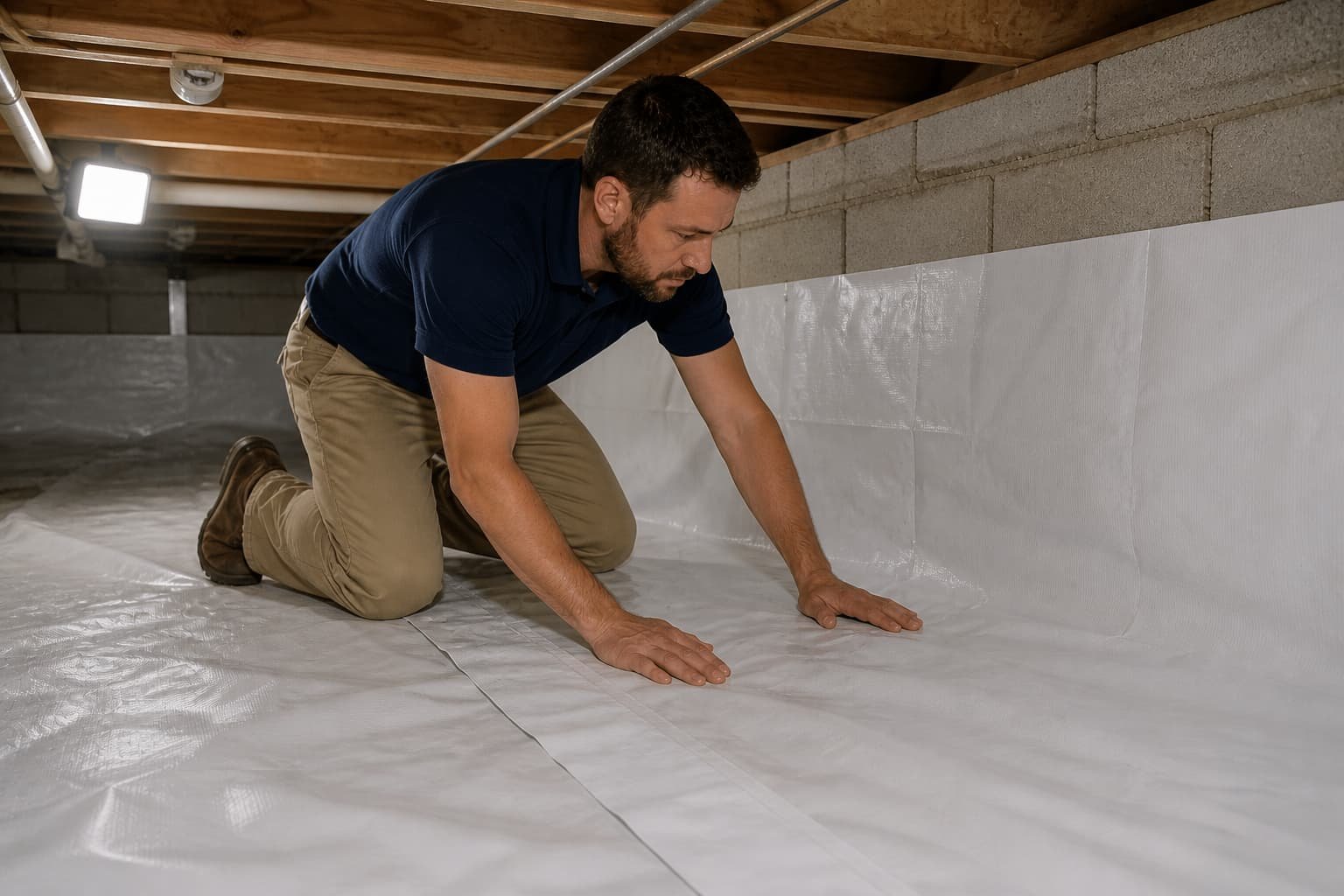
Crawl Space Encapsulation
We install a heavy-duty polyethylene vapour barrier across the crawl space floor and up the foundation walls, then seal all vents and penetrations to create a conditioned, dry environment under your home. This stops the moisture cycle completely. Many Springfield homeowners notice improved floor rigidity, lower humidity on the ground floor, reduced musty odours, and lower energy costs within the first season after encapsulation. The barrier we install is a reinforced 20-mil liner — not the thin plastic sheeting that deteriorates within a few years.
Structural Support and Beam Repair
Where floor joist or beam damage from long-term moisture exposure has caused floors to sag or bounce, we install sister joists alongside damaged members, new support beams where spans have lost integrity, or adjustable steel posts to restore the floor system to level. We assess load paths carefully before specifying any structural repair — a floor that feels soft in the centre of a room often has moisture-damaged joists that need sistering before encapsulation alone will hold the floor steady. Structural repairs and encapsulation are frequently done together as a single scope of work.
Sump Pump Installation in Crawl Spaces
Crawl spaces that collect standing water during heavy rain events need active drainage before encapsulation can be effective. We install sump pump systems in the low point of the crawl space, connected to exterior discharge. Battery backup units ensure the system keeps running during the power outages that sometimes accompany major Ozarks storm events. A crawl space that floods seasonally needs the drainage solved first — encapsulating over a wet crawl space traps the water and accelerates damage rather than preventing it.
Vent Sealing and Dehumidification
After encapsulation, we seal all existing foundation vents permanently. Outside air entering through open vents is the primary moisture source in a vented crawl space — once the space is encapsulated, those vents work against the system. Where humidity levels remain elevated after sealing due to residual ground moisture or climate conditions, we install a crawl space dehumidifier sized to the square footage of the space. A properly encapsulated and dehumidified crawl space should maintain relative humidity below 55 percent year-round.
What to Expect
Every crawl space job starts with a free inspection. We access the space, assess moisture levels, check joist and beam condition, look for standing water or active leaks, and evaluate the existing vapour barrier if one is present. You’ll receive a written scope of work with pricing before any commitment is made. Most encapsulation projects in a standard Springfield home are completed in one to two days.
Service Area
We serve Springfield and surrounding communities including Nixa, Ozark, Republic, Joplin, and Branson across Greene, Christian, Lawrence, and Taney counties.
The U.S. Environmental Protection Agency publishes guidance on indoor moisture control and its relationship to air quality and structural integrity in residential buildings.