📞 Call (417) 275-0205 — Free Estimate
Foundation Cracks in Springfield, MO — What Different Types Mean
Foundation cracks in Springfield homes are common — but not all cracks are equal. Some are cosmetic, some are structural, and some are urgent. The difference between them comes down to crack type, direction, width, location, and whether the crack is active or dormant. Greene County’s clay-heavy Ozarks soils put foundation walls through significant stress with every seasonal moisture cycle, and understanding what a specific crack is telling you is the first step toward knowing whether it needs immediate attention or periodic monitoring. This guide covers the most common foundation crack types we encounter in Springfield homes and what each one typically means.
Vertical Foundation Cracks
Vertical foundation cracks run straight up and down and are among the most common cracks in poured concrete walls. They typically occur as concrete cures and shrinks — a process called shrinkage cracking — and are generally considered low-risk when they are hairline width, consistent from top to bottom, and have not changed since they first appeared. However, a vertical crack that is wider at the top than the bottom is a different situation entirely. Width variation indicates differential settlement — the footing beneath one section of the wall has dropped relative to the adjacent section, and the wall is reflecting that movement. Vertical settlement cracks require professional assessment to determine whether the underlying movement has stabilised or is ongoing.
Horizontal Foundation Cracks
Horizontal foundation cracks are the most serious crack type in a basement wall and should never be left without professional evaluation. They run across the wall at roughly mid-height and indicate that the wall is under active lateral pressure from saturated soil on the outside. In Springfield, where Greene County clay retains moisture for extended periods after heavy rain events, horizontal cracking is a reliable indicator that hydrostatic pressure has exceeded the wall’s design load. Block walls are particularly vulnerable — horizontal cracks in block foundations allow the wall to step inward one course at a time. A horizontal crack that has been present for more than one season without repair is almost certainly wider than it was when it first appeared.
Stair-Step Foundation Cracks
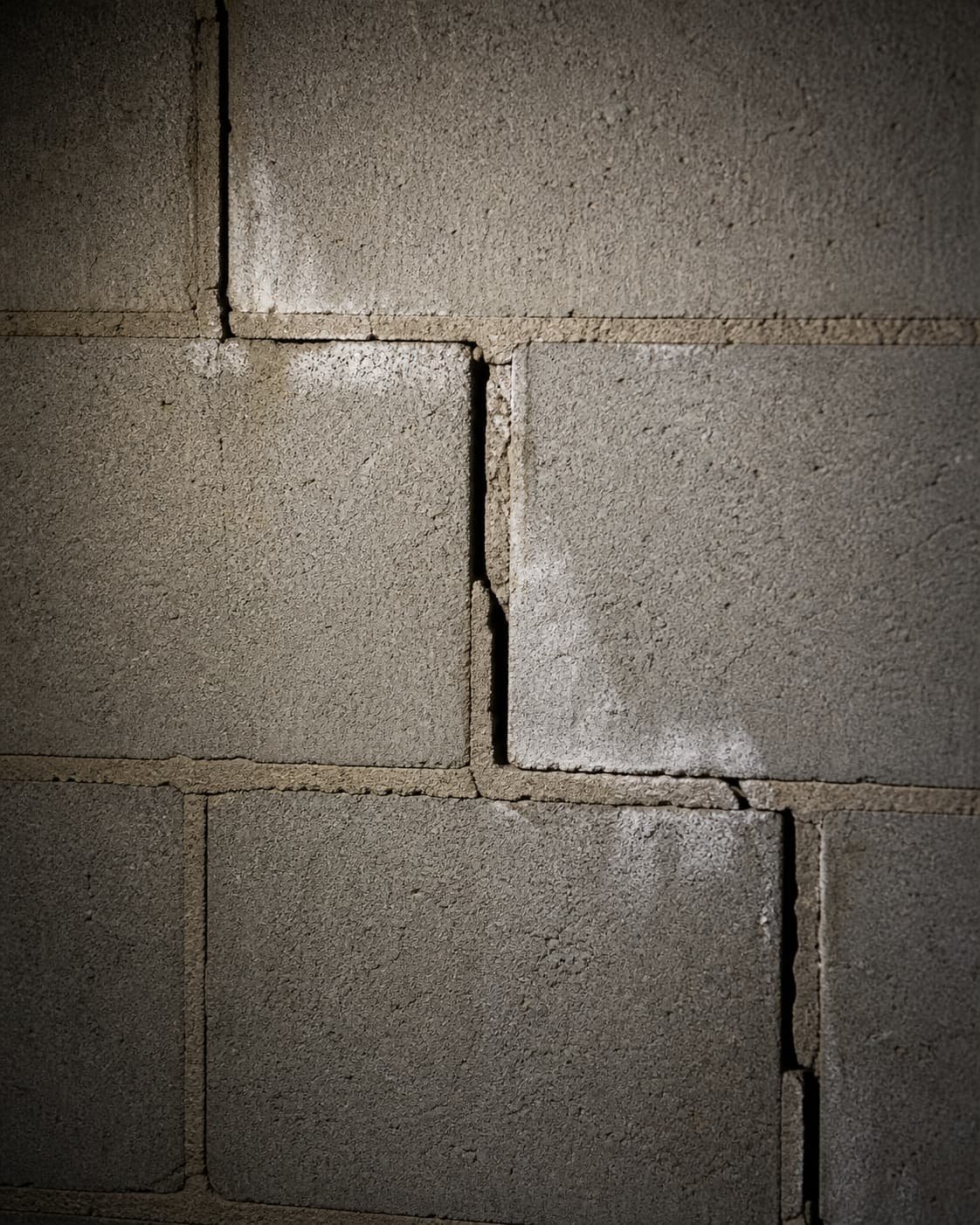
Stair-step foundation cracks follow the mortar joints of a block wall in a diagonal stepping pattern and indicate differential settlement — one section of the foundation has dropped relative to the adjacent section, causing the wall to crack along the weakest path, which is the mortar joint rather than through the block itself. Stair-step cracks are extremely common in older Springfield homes in Rountree, Midtown, and South Haven where block foundations from the 1950s and 1960s have been subject to decades of Greene County clay movement. The severity depends on the width of the crack and whether the stepping pattern is still active. A stair-step crack with gaps wide enough to insert a credit card is an active structural concern.
Diagonal Foundation Cracks
Diagonal foundation cracks in poured concrete walls typically run at a 45-degree angle from the corner of a window or door opening and indicate settlement or heave at one end of the wall. Corner cracks that are consistent in width and have not changed are often the result of past settlement that has since stabilised. Corner cracks that are wider at one end, or that are accompanied by corresponding diagonal cracking on the opposite side of the opening, suggest ongoing movement that requires assessment. Diagonal cracks in brick veneer on the exterior of a slab home — particularly stair-stepping through mortar joints around windows — are one of the most visible early indicators of slab foundation movement in Springfield’s newer housing stock.
Floor Cracks and Slab Cracks
Foundation cracks in concrete slab floors are common in Springfield homes built on grade. Hairline cracks that run through the slab without height differential between the two sides are typically shrinkage cracks from the original pour and are low concern. Cracks where one side of the slab has risen or dropped relative to the other — producing a lip or edge that can be felt underfoot — indicate differential movement in the soil beneath and should be assessed. A slab crack accompanied by a sticking door nearby is a reliable indicator that the movement is structural rather than cosmetic.
When to Call a Professional
Foundation cracks that warrant an immediate professional inspection include any horizontal crack in a basement wall, any crack that has visibly widened or lengthened since it was first noticed, any crack accompanied by water intrusion, stair-step cracks with gaps wider than a quarter inch, and any crack paired with door or window alignment problems. Foundation cracks that can be monitored over one to two seasons before calling include hairline vertical cracks in poured concrete that have been consistent for several years and show no signs of water entry. If in doubt, call — a free inspection takes less than an hour and produces a definitive assessment.
Free Foundation Crack Inspection in Springfield
Foundation Springfield provides free on-site inspections for homeowners concerned about foundation cracks anywhere in the Springfield area including Nixa, Ozark, Republic, Joplin, and Branson. We measure crack width, assess activity, check wall plumb, and provide a written report with recommended action before any commitment is required. Call us at (417) 275-0205 to schedule your free inspection.
The National Institute of Building Sciences publishes technical reference on residential foundation systems and structural crack assessment standards.